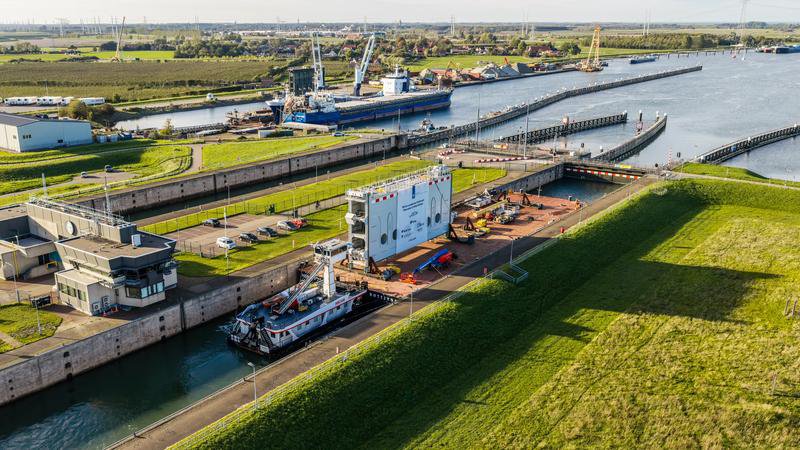
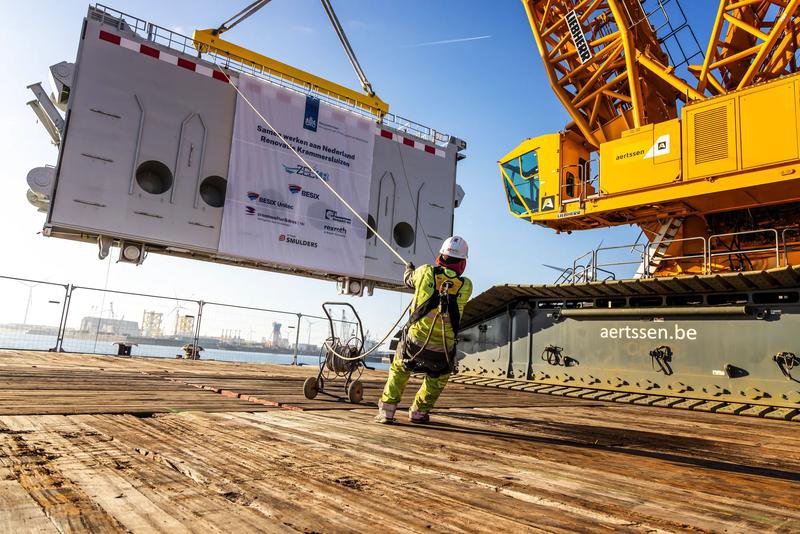
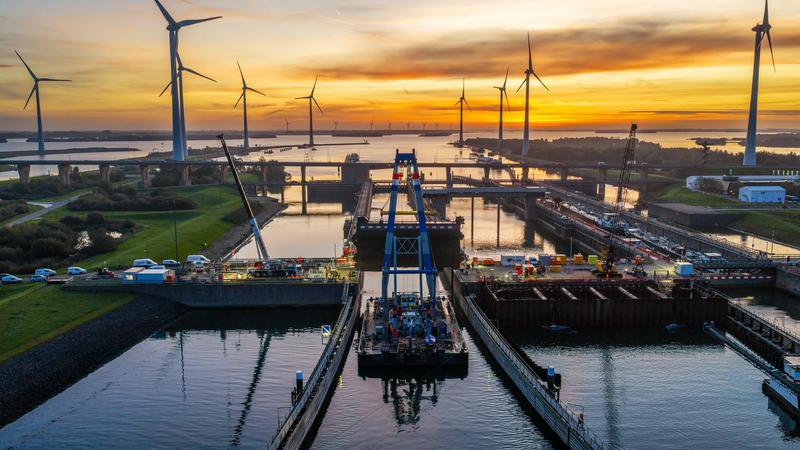
After an extensive refurbishment in Vlissingen, the first lock gate of the Krammer Locks complex has returned to its home.
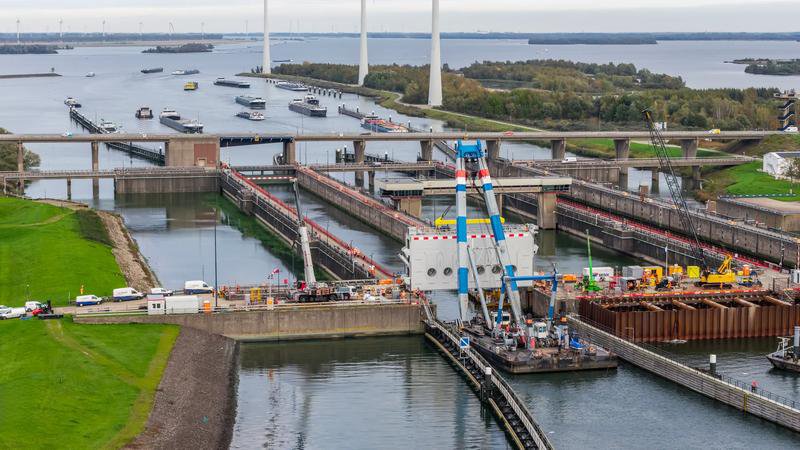
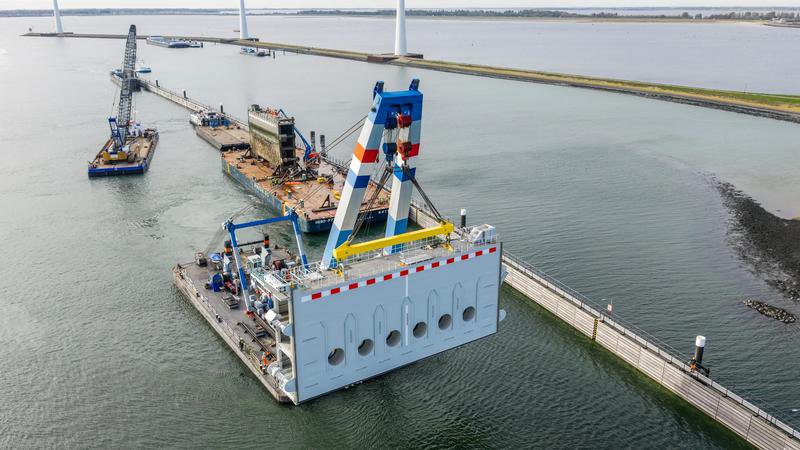
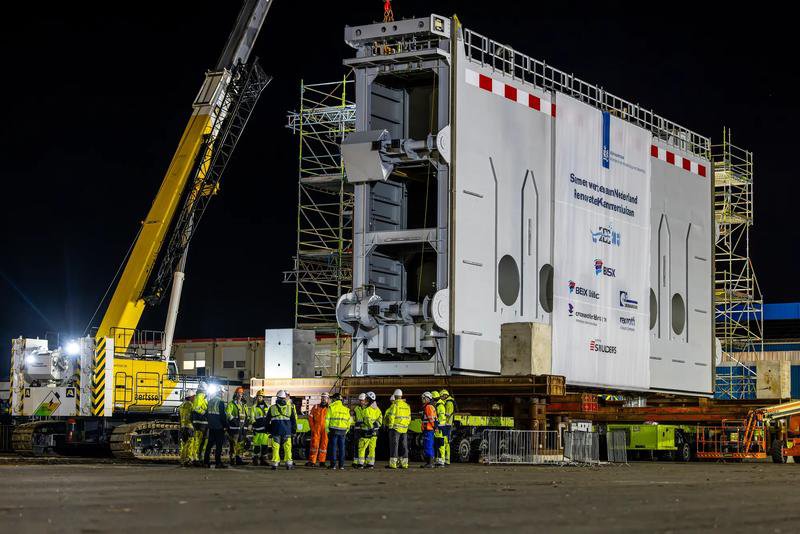
The huge structure weighs 340,000 kilograms and measures 26 by 4 by 12 metres. It travelled 70 kilometres along Zeeland’s waterways before a heavy-lift vessel hoisted it onto roller carriages at the bottom of the lock chamber. Our team developed a special positioning system to guide the gate underwater and place it with millimetre precision.
A 70-kilometre journey across Zeeland’s waterways
After leaving Vlissingen, the gate began its return journey on a pontoon propelled by a pusher tug. It travelled along the Canal through Zuid-Beveland, passing the Hansweert locks and going under the Vlake and Post bridges. From there, it crossed the Oosterschelde towards the Krammer Locks. The team carefully planned the route and considered the various causeways to ensure the gate could reach its destination safely.
Positioning 340 tonnes of steel
The gate’s arrival at the Krammer Locks did not mean the most challenging work was over. Our engineers developed a special positioning system to install it successfully. Before the operation, everyone involved practised the process on dry land. This helped the team review each step, prepare the method in detail and coordinate their work. Using a heavy-lift vessel, the team lowered the gate onto the bottom of the lock chamber in just one day.
A new gate connected to an old system
Over the next five weeks, the mechanical, hydraulic and electrical systems will be connected and thoroughly tested. This is a significant challenge because the refurbished gate must work with the existing system, which is 40 years old. The gate can return to service only once everything is working as it should.
Lock gates play a key role in the complex’s major reconstruction
The four lock gates are central to the reconstruction of the Krammer Locks. They hold back water, including during high-water conditions, and help vessels pass safely through the complex.
The gates will also take on an important new role: helping to keep freshwater and saltwater separate. Special openings and valves let water flow through each gate in a controlled way. This allows the water level in the lock chamber to match the level on the side towards which a vessel is sailing, a process known as levelling. The system can also flush much of the saltwater out of the chamber. Together with an air bubble curtain, this helps prevent excess saltwater from reaching the freshwater lake of Volkerak-Zoommeer.
Major upgrades to the lock gate
Alongside its extensive refurbishment, the gate has received a new system for levelling and flushing. The rolling gate now has six large butterfly valves, each approximately 1.6 metres in diameter, along with their associated components.
The hydraulic system has been renewed, and the steel structure has been inspected. Openings, pass-throughs and fixtures have been adapted to suit the new installations. The gate structure has also been reinforced, and its existing protective coating has been removed and replaced.
New and modified features support safe operation and maintenance. These include guardrails, escape routes, access hatches, lighting, climate control in the technical room and equipment that helps technicians work safely.
The result
For users, the result may look much the same: a lock gate that opens and closes. But behind this everyday movement is a carefully designed, complex technical system, now being renewed and prepared for the decades ahead. This will help the Krammer Locks operate safely, reliably and efficiently in the future.
Commissioned by Rijkswaterstaat, main contractor BESIX NL is leading the reconstruction and modernisation of the Krammer Locks complex, working with partners BESIX Unitec, Croonwolter&dros, DEMAKO, Smulders (Iemants) and Bosch Rexroth.